Amsterdam is small. A first-time visitor staying anywhere inside the A10 ring road can reach the city centre in under 25 minutes, and most of the famous neighbourhoods are walkable to each other. So the "where to stay" question is less about logistics than about what you want to wake up to: water and bikes, market streets, museum lawns, or a ferry across the IJ.
This is an honest neighbourhood-by-neighbourhood read - vibe, price tier, who each one actually suits - written by someone who lives in the city rather than visits it.
At a glance
| Neighbourhood | Vibe | Price | Best for | Walk to Anne Frank House | Nearest tram / metro |
|---|---|---|---|---|---|
| Canal Belt (Grachtengordel) | Postcard, central | €€€ | First-timers, couples | 5 min | Tram 2/12, Westermarkt |
| Jordaan | Quaint, walkable | €€-€€€ | First-timers wanting quieter | 5-10 min | Tram 13/17, Marnixstraat |
| De Pijp | Foodie, lively | €€ | Eaters, 2nd-time visitors | 25 min | Metro 52, De Pijp |
| Oud-West | Local, leafy | €€ | Budget-conscious, repeat visitors | 15-20 min | Tram 7/17, Bilderdijkstraat |
| Amsterdam Noord | Industrial, raw | € | Budget, design-minded | Ferry + 10 min | Ferry from Centraal, metro 52 |
| Red Light District (Wallen) | Loud, touristy | €€€ | Short stays, stag groups | 15 min | Centraal Station |
| Museum Quarter | Quiet, leafy, museum-y | €€€ | Museum lovers, families | 20 min | Tram 2/12, Van Baerlestraat |
| Amsterdam Oost | Local, up-and-coming | €€ | Real-Amsterdam seekers | 25-30 min | Tram 19, metro 51/53/54 |
Price tiers are rough: € is under €150/night for a decent 3-star, €€ is €150-250, €€€ is €250+. Peak season (April-October, plus King's Day and December) pushes everything up a tier.
Canal Belt (Grachtengordel) - the default first-timer pick
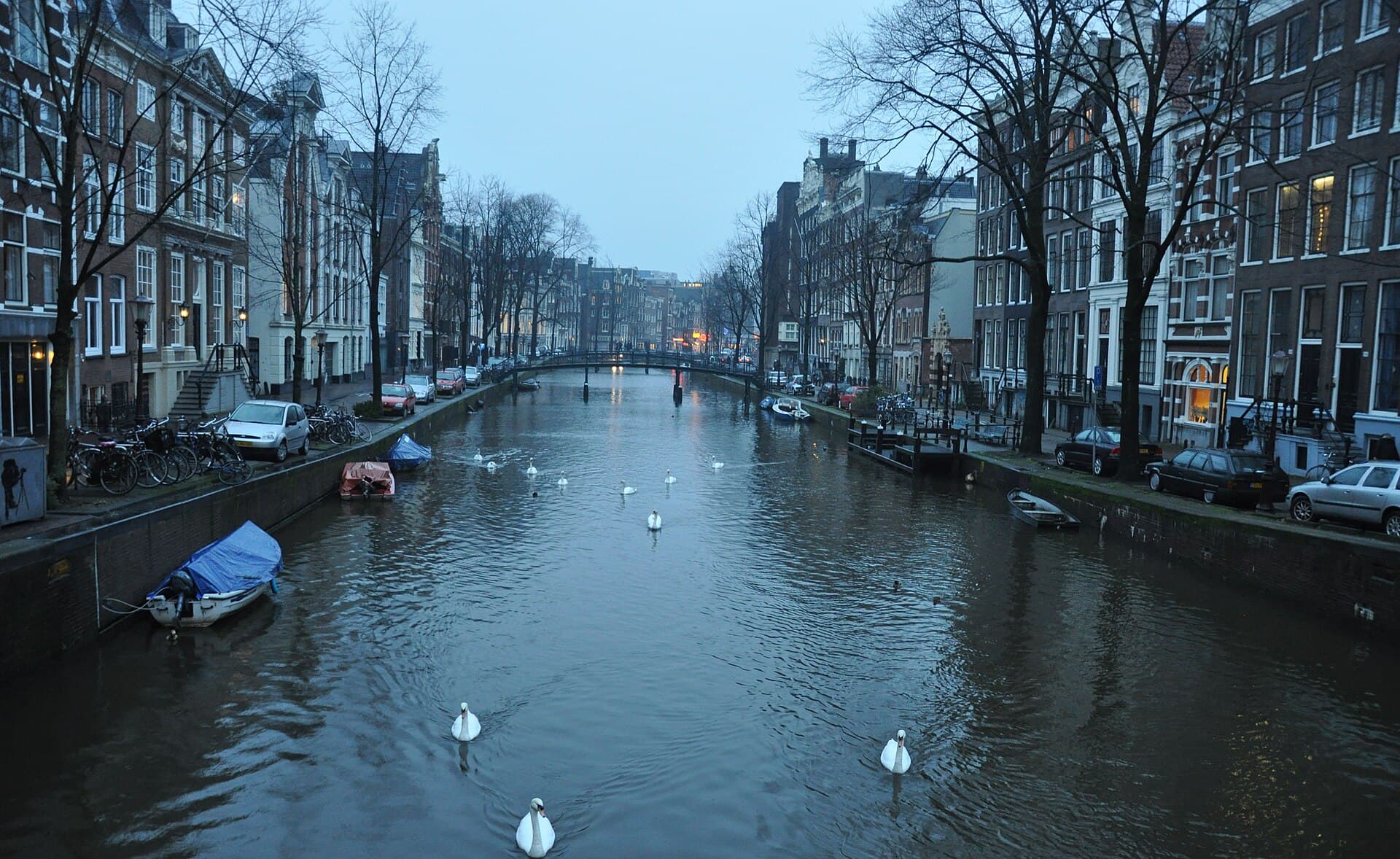
The Canal Belt is the UNESCO-listed horseshoe of canals between Centraal Station and the Rijksmuseum. It is what people picture when they picture Amsterdam: gabled merchant houses, narrow waters, hump-backed bridges, the works.
It is also where most first-time visitors should stay if they can afford it. Anne Frank House is in it. The Nine Streets shopping district is in it. You can walk to the Rijksmuseum, the Van Gogh, the Red Light District, and Centraal Station without ever boarding a tram.
The downside is price - canal-view rooms at decent hotels start around €280 a night in shoulder season and clear €450 in peak. The other downside is that, by definition, the most photographed parts of the city are full of people photographing them.
- Best for: first-timers, couples, anyone with a short trip who wants zero transit time
- Skip if: you're on a budget or you want anything that feels lived-in
- Walk to Anne Frank House: 5 minutes from the western half, 15 from the eastern
See Canal Belt hotels on Booking.com
Jordaan - quainter, slightly cheaper, the smart second pick
The Jordaan sits immediately west of the Canal Belt. Originally a working-class district, now thoroughly gentrified but still small-scale: narrow streets, brown cafés, the Noordermarkt on Saturdays, courtyards (hofjes) you stumble into by accident.
It's my standard recommendation for first-timers who don't get a Canal Belt room they like. The Anne Frank House is on the eastern edge of the Jordaan, so you're often closer to it from the Jordaan than from large parts of the Canal Belt itself. Tram coverage is good but you barely need it.
Hotels are slightly cheaper than the Canal Belt - mostly small, family-run, often with awkward stairs and tiny lifts. Charm forward, ergonomics second.
- Best for: first-timers, couples, repeat visitors who want walkability without the price ceiling
- Skip if: you need step-free access (a lot of older buildings have brutal staircases)
- Walk to Anne Frank House: 5-10 minutes from most of it
For where to eat once you're there, our best brown cafés in Amsterdam round-up covers half the Jordaan.
See Jordaan hotels on Booking.com
De Pijp - foodie, lively, a second-trip favourite
De Pijp is the neighbourhood south of the canals built in the late 19th century - tall narrow blocks, the Albert Cuypmarkt running down the middle, and the densest concentration of good restaurants in the city.
It's a strong pick if you've been to Amsterdam before or your trip is built around food. From a hotel in De Pijp you can walk to the Heineken Experience in three minutes and the Rijksmuseum in fifteen. The Canal Belt is a tram ride or a 20-minute walk. The neighbourhood itself stays lively until late without being a stag-party zone.
- Best for: foodies, second-time visitors, anyone who wants to eat dinner near their hotel
- Skip if: you want everything within a five-minute walk - De Pijp is a tram ride from the canals
- Walk to Anne Frank House: ~25 minutes, or 12 minutes by tram
See our where to eat in De Pijp guide if you're considering it.
See De Pijp hotels on Booking.com
Oud-West - local, leafy, and the best value for the quality
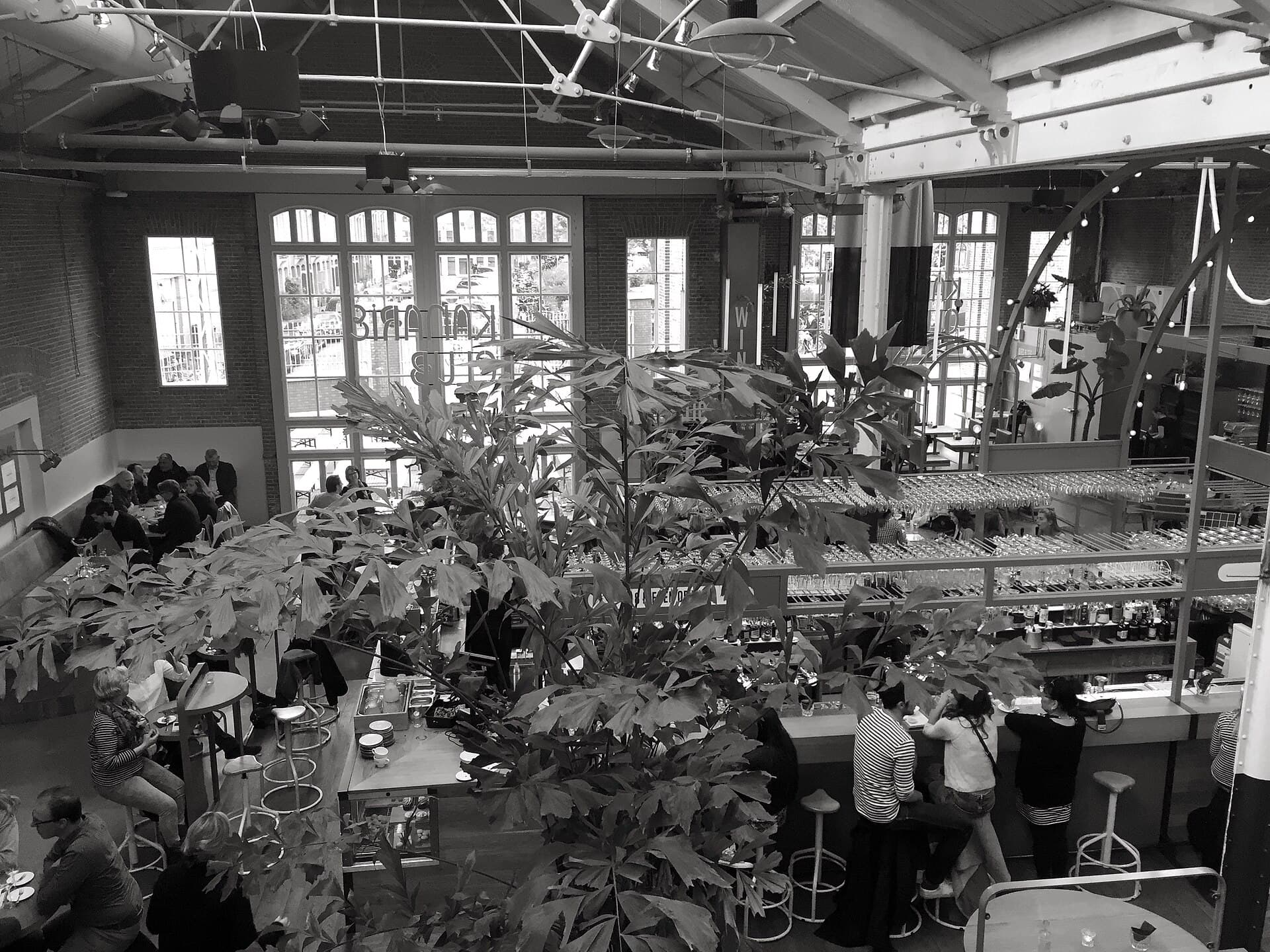
Oud-West sits west of the Singelgracht canal, just behind Vondelpark and Leidseplein. It's residential but with a strong neighbourhood retail strip along Kinkerstraat and the indoor De Hallen food hall as its centrepiece.
This is where I send people who want a "real Amsterdam" base without sacrificing access. From Oud-West you're a 15-minute walk or a five-minute tram to the Canal Belt; the Vondelpark is at your back door; and hotel rates run €60-100 below the canal-ring equivalents.
The trade-off is that you're staying in a neighbourhood, not a postcard. Mornings are bin lorries and parents on cargo bikes, not canal-cruise boats.
- Best for: repeat visitors, budget-conscious travellers, families with kids who need a park
- Skip if: you've only got two nights and want the centre at your door
- Walk to Anne Frank House: 15-20 minutes
For more on the neighbourhood itself, see our Oud-West local guide.
See Oud-West hotels on Booking.com
Amsterdam Noord - the cheapest stay, with a ferry as your commute
Noord is across the IJ - the wide stretch of water behind Centraal Station. The free GVB ferries run every few minutes, day and night, and the crossing takes two minutes. So practically speaking, a hotel in southern Noord is closer to Centraal than most of De Pijp.
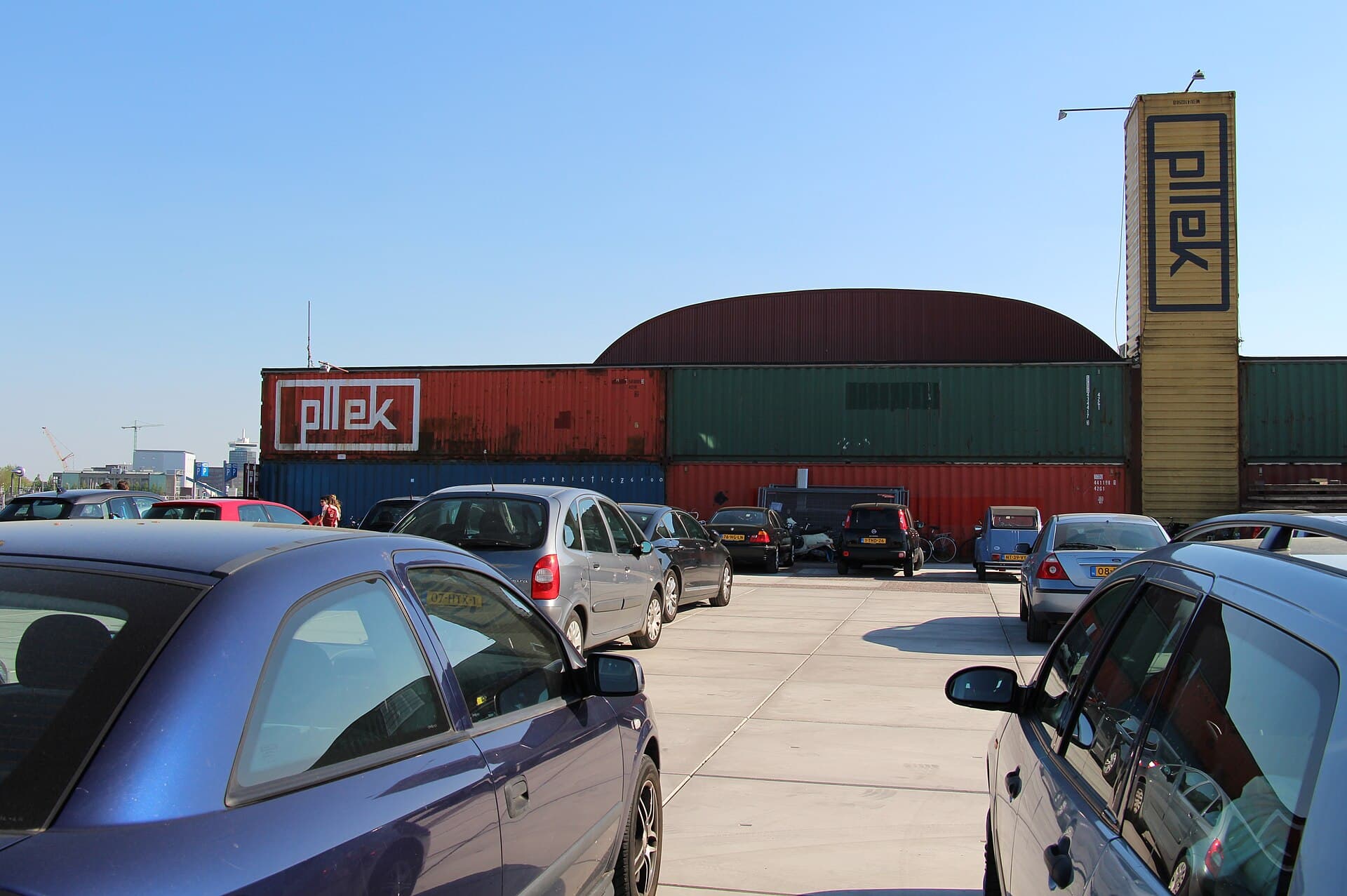
What Noord buys you is price and atmosphere. The neighbourhood is industrial-creative: former shipyards, container restaurants, the EYE Filmmuseum, the A'DAM Lookout, and NDSM Wharf further north. Rooms can be 30-40% cheaper than equivalent quality in the centre.
The downside is the ferry adds a step to everything. If you're the sort who likes wandering home from a bar at 01:00, you'll want to either drink in Noord or accept a 15-minute combined ferry-and-walk back.
- Best for: budget travellers, design-conscious repeat visitors, anyone who's done the centre before
- Skip if: you only have one or two days, or you'd resent any extra commute
- Walk to Anne Frank House: ferry + 10 minute walk, ~15-20 minutes total
Full neighbourhood writeup: a half-day in Amsterdam Noord.
See Amsterdam Noord hotels on Booking.com
Red Light District (De Wallen) - fine for a short stay, not a great hotel zone
The Red Light District wraps around the oldest streets in the city, just east of Centraal Station. Despite the reputation, it's a working medieval neighbourhood: Oude Kerk, narrow lanes, canals, plus the windows and coffeeshops people come to gawp at.
For a one- or two-night stay it's fine - you're walking distance to everything, hotel prices are actually no cheaper than the rest of the centre, and the area is busy and policed enough that walking around late is not a concern. For a longer stay it's wearing. Noise carries on water until 02:00 on weekends, and many of the cheaper hotels here cater specifically to stag groups. The city is also actively trying to move the window-prostitution district out of here (the long-running Erotisch Centrum project), so the area is in slow flux.
- Best for: a 1-2 night first-timer stay where being right in it is the point
- Skip if: you want sleep, you're travelling with kids, or you want a "lived-in" feel
- Walk to Anne Frank House: ~15 minutes
See Red Light District hotels on Booking.com
Museum Quarter - quiet, leafy, perfect for museum-led trips
The Museumkwartier sits around Museumplein, the wide grassy square with the Rijksmuseum on one side and the Van Gogh on the other. It's the most residential of the central neighbourhoods - old money, embassies, the Concertgebouw, Vondelpark a block away.
If your trip is built around museums or you're travelling with kids who need green space, this is the strongest pick. It's also the quietest central neighbourhood at night by some margin - a real plus for sleep, a real minus if you wanted to walk home from a bar.
Hotels here are generally larger and more international than in the Canal Belt - more 4- and 5-stars, fewer 28-room canal-house places.
- Best for: museum-led trips, families with kids, light sleepers who still want central
- Skip if: you want a buzzy evening five minutes from your door
- Walk to Anne Frank House: ~20 minutes, or 10 minutes by tram 2
See Museum Quarter hotels on Booking.com
Amsterdam Oost - up-and-coming, the most actual-Amsterdam of the lot
Oost is the broad area east of the centre, anchored on Oosterpark and the Dappermarkt. It's been the city's quietly-cool neighbourhood for a decade now, and the gentrification has settled in - good coffee, decent restaurants, the Tropenmuseum, a strong tram and metro grid into the centre.
It's a smart pick for repeat visitors or anyone whose main interest is in eating, drinking, and walking around a real city rather than ticking off sights. Hotels are slightly thinner on the ground than in Oud-West but the ones that exist tend to be good value.
- Best for: repeat visitors, longer stays, "I want to feel like I live here" trips
- Skip if: it's your first time and you'll resent the 25-minute walk in
See Amsterdam Oost hotels on Booking.com
How to actually choose
A few honest heuristics, in order:
- First time, 2-3 nights, money no object: Canal Belt or Jordaan
- First time, 2-3 nights, want value: Jordaan or Oud-West
- Repeat visit: De Pijp, Oost, or Noord
- Travelling with kids: Museum Quarter or Oud-West
- One night only, near the action: anywhere central including the Red Light District
- Long stay (week+): Oud-West, Oost, or Noord - centre fatigue is real
A few things that don't matter as much as people think they do. The walk from the Canal Belt to the Museum Quarter is 20 minutes - i.e. you can stay in either and easily visit the other. The tram network is good enough that staying in Oud-West or De Pijp adds maybe 10 minutes to your day versus a central hotel. And Anne Frank House timing is set by the ticket release, not by how close your hotel is.
A few things that matter more than people think. Light sleepers should avoid the canal ring on weekends - sound bounces off the water and Heineken-fuelled groups are still on the street at 03:00. Anyone arriving late from Schiphol should pick somewhere within five minutes of a Centraal-bound tram - see our Schiphol to Amsterdam centre guide for the routes. And anyone visiting in April or December should book early; the city sells out for King's Day weekend and the run-up to Christmas regardless of neighbourhood.
For more on when to come in the first place - which often nudges the where - see best time to visit Amsterdam. And if you're already weighing a sightseeing pass on top of the hotel, our I Amsterdam City Card review has the maths on whether it pays.
Hotels here move fast in peak season. Book the neighbourhood before the specific property.